
When damaged or missing teeth make it difficult to eat, speak, or smile comfortably, fixing one tooth at a time may not address the bigger picture. A full mouth restoration takes a comprehensive approach, bringing multiple treatments together in a plan designed around a patient’s oral health, comfort, and goals.
For someone researching full mouth restoration in Tampa, FL, the range of terms and treatment options can feel overwhelming. Full mouth reconstruction, full-arch implants, implant-supported teeth, crowns, and bridges are related concepts, but they do not always mean the same thing.
This guide explains the basics in everyday language, including who may be a candidate, how treatment is planned, what recovery may involve, and which questions to ask at a consultation.
This article offers general educational information and is not a diagnosis or personalized treatment recommendation. A dentist or qualified dental specialist should evaluate individual symptoms, risks, and treatment needs.
What Is a Full Mouth Restoration?
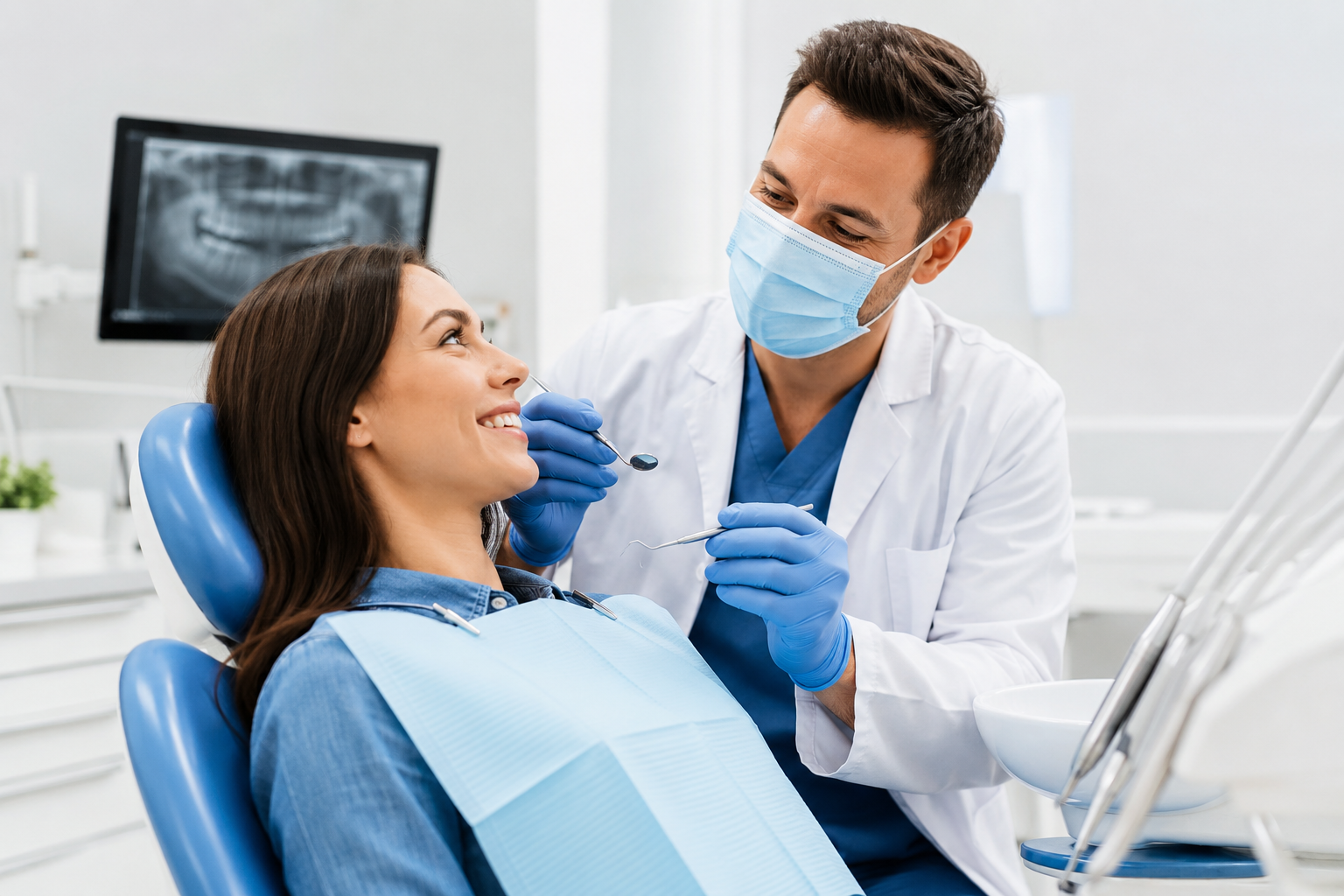
A full mouth restoration is a personalized treatment plan that rebuilds or replaces many teeth across the upper jaw, lower jaw, or both. It may also be called a full mouth reconstruction or rehabilitation.
There is no single procedure that works for every patient. One person may need several crowns and a bridge, while another may need failing teeth removed and replaced with implant-supported arches. The right approach depends on the condition of the teeth, gums, jawbone, bite, and existing dental work.
Depending on the findings, a treatment plan may include:
- Dental crowns for teeth that can be preserved
- Bridges to replace one or more missing teeth
- Dental implants to support individual or multiple replacement teeth
- Implant-supported full-arch restorations
- Removable dentures or implant-retained dentures
- Treatment for gum health concerns
- Tooth removal when a tooth cannot be predictably restored
- Bone grafting when additional implant support is needed
- Bite adjustments or protective appliances
The aim is not simply to create whiter or straighter-looking teeth. A thoughtful restoration plan considers appearance alongside chewing function, oral health, comfort, and maintainability.
Who Might Consider Full Mouth Restoration?
Full mouth restoration is generally considered when dental concerns affect many teeth or when isolated repairs are unlikely to provide a stable long-term result. A consultation may be appropriate for someone experiencing:
- Multiple missing or severely damaged teeth
- Loose, cracked, or repeatedly repaired teeth
- Extensive decay or failing dental work
- Difficulty chewing a varied diet
- Uncomfortable or unstable dentures
- Advanced tooth wear caused by grinding, erosion, or bite problems
- Changes in speech related to missing teeth
- Embarrassment or anxiety about the appearance of the smile
These signs do not automatically mean that every tooth needs to be replaced. Whenever appropriate, a dentist may recommend preserving healthy or treatable natural teeth. The purpose of a comprehensive evaluation is to identify what can be maintained, what needs repair, and what may require replacement.
How Is a Full Mouth Restoration Planned?
Careful planning is one of the most important parts of full mouth treatment. Because the teeth, gums, jaw joints, facial structure, and bite work together, the dental team needs to understand how changing one part of the smile may affect the rest.
1. Conversation and health review
The first visit typically begins with a discussion about current concerns, dental experiences, health history, medications, and treatment goals. Patients should also share any concerns about anxiety, recovery, finances, or the appearance of replacement teeth.
2. Comprehensive examination
The dentist examines the teeth, gums, bite, existing restorations, and areas of tooth loss. Diagnostic records may include photographs, X-rays, impressions, digital scans, or 3D imaging.
At 24 Hour Smiles, the consultation process may use 3D imaging and high-resolution X-rays to help create an individualized plan. The practice also states that sedation options are available for patients who experience dental anxiety. Suitability for sedation depends on a patient’s health and clinical assessment.
3. Review of treatment choices
There may be more than one reasonable way to restore a smile. A clear treatment discussion should compare the expected function, appearance, maintenance needs, limitations, risks, timeline, and cost of each option.
Patients can ask to see the plan in stages. This can make a complex process easier to understand and may clarify which steps address urgent health concerns and which focus on the final restoration.
Where Do Full Mouth Dental Implants Fit In?
Dental implants are one possible foundation for a full mouth restoration. An implant is placed in the jaw to support a dental prosthesis. Rather than installing one implant for every missing tooth, some full-arch designs use a planned number of implants to support a connected set of replacement teeth.
Implant-supported teeth may provide greater stability than a conventional removable denture, but they are not the right choice for everyone. Bone availability, gum health, medical history, smoking or nicotine use, oral hygiene, and the way the upper and lower teeth meet may influence candidacy and risk.
Implant treatment also depends on osseointegration, the biological process through which the implant develops a stable connection with the surrounding bone. Published clinical literature describes effective osseointegration and careful surgical planning as important parts of implant-supported full-mouth rehabilitation. However, individual outcomes vary, and implants still require professional monitoring and daily cleaning.
24 Hour Smiles describes itself as an implant-focused dental center offering full-mouth dental implant solutions in Tampa. A clinical evaluation is necessary to determine whether implants, another restorative approach, or a combination of treatments is appropriate.
Can a New Smile Really Be Provided in 24 Hours?
“Same-day teeth” or “teeth in 24 hours” usually refers to placing implants and attaching a provisional, or temporary, set of teeth within a short treatment window for an eligible patient. It should not be interpreted as meaning that all healing is complete or that the final restoration is always delivered in one day.
It helps to separate the process into distinct phases:
- Early symptom recovery: Tenderness, swelling, and temporary diet changes may occur after treatment. The experience varies according to the procedures performed and the individual patient.
- Soft-tissue healing: The gums continue to heal and change after surgery or extractions.
- Osseointegration: The implant and surrounding bone develop biological stability over a longer healing period. Progress must be assessed clinically.
- Final restoration: After the dentist confirms appropriate healing and stability, a final prosthesis may be designed or delivered according to the treatment plan.
Some patients may not qualify for immediate provisional teeth. Others may need extractions, bone grafting, gum treatment, or additional healing before moving forward. Only an examination can establish a realistic sequence.
What Is Recovery Like?
Recovery depends on the extent of care. Placing crowns on existing teeth is different from undergoing tooth removal, grafting, implant placement, or full-arch surgery. Patients should follow the instructions provided by their treating clinician rather than relying on another person’s recovery story.
After surgical treatment, instructions may address medications, oral hygiene, activity, food texture, and use of a temporary restoration. Keeping follow-up appointments is important because the dental team needs to monitor healing, check the bite, and make adjustments when necessary.
Patients should contact the treating office if symptoms feel severe, worsen unexpectedly, or do not follow the recovery pattern explained by the clinician. Urgent concerns such as uncontrolled bleeding, trouble breathing or swallowing, or a serious medication reaction require prompt medical attention.
How Much Does Full Mouth Restoration Cost in Tampa?
There is no meaningful one-price answer because “full mouth restoration” can describe many different combinations of care. The final cost may depend on:
- Whether treatment involves one arch or both arches
- The number and condition of teeth being treated
- The number and type of implants, if used
- The need for extractions, grafting, or other preparatory care
- The materials selected for temporary and final teeth
- Diagnostic imaging, sedation, laboratory, and follow-up fees
- Dental insurance benefits or exclusions
When comparing estimates, patients should ask for an itemized plan. A lower initial quote may not include every phase, while another estimate may bundle imaging, surgery, provisional teeth, and the final restoration. Patients should confirm what is included, what may create an additional charge, and which fees are refundable if the treatment plan changes.
Questions to Ask at a Consultation
A good consultation should leave the patient informed rather than pressured. Helpful questions include:
- Which teeth can be preserved, and why?
- What treatment options are available besides removing the remaining teeth?
- Am I a candidate for implant-supported teeth?
- Would I receive temporary teeth, and when?
- How will healing be evaluated before the final restoration?
- What material is recommended for the final teeth?
- What are the main risks and limitations in my case?
- How should I clean and maintain the restoration?
- What is included in the written estimate?
- What follow-up care or warranty terms apply?
Bringing a medication list and writing down questions before the appointment can make the conversation more productive. A trusted family member may also attend if the patient wants help remembering details.
Caring for a Restored Smile
Replacement teeth cannot develop cavities in the same way natural enamel can, but that does not make them maintenance-free. The gums, supporting bone, remaining natural teeth, implant surfaces, and restoration all need regular attention.
The dental team may recommend a specific toothbrush, floss threader, interdental brush, water flosser, or other cleaning aid based on the restoration’s design. Professional checkups allow the team to examine the tissues, assess the bite, clean areas that are difficult to reach, and look for early signs of wear or inflammation.
Avoiding tobacco, following medical guidance, wearing a protective appliance when recommended, and reporting looseness or discomfort promptly can also help protect the investment in treatment.
Frequently Asked Questions
Is full mouth restoration the same as full mouth implants?
No. Full mouth restoration is the broader process of rebuilding many or all teeth. It may involve implants, but it can also include crowns, bridges, removable dentures, gum care, or a combination of treatments.
Will every remaining tooth need to be removed?
Not necessarily. The dentist evaluates each tooth and the overall bite before making a recommendation. Restorable teeth may sometimes be retained, while teeth with an unfavorable outlook may need a different approach.
Are full mouth implants removable?
Some implant-supported restorations remain fixed in place and are removed only by a dental professional. Others are designed to snap on and off for cleaning. Patients should ask which design is being proposed and what daily maintenance it requires.
Can dental anxiety be managed during treatment?
Many practices provide comfort measures, and some offer sedation options. The appropriate choice depends on the procedure, anxiety level, health history, medications, and whether a responsible adult is available when required.
How long does full mouth restoration take?
The timeline varies widely. Some eligible patients may receive provisional teeth soon after implant placement, but gum healing, osseointegration, bite refinement, and delivery of the final restoration are separate stages. A dentist can provide a case-specific schedule after completing diagnostic records.
Take the First Step Toward a Healthier, More Comfortable Smile
A full mouth restoration can feel like a major decision, but patients do not need to understand every option before scheduling an initial visit. The consultation is an opportunity to learn what is happening, discuss priorities, and compare personalized paths forward without assuming that one solution fits everyone.
Patients considering full mouth restoration in Tampa, FL can contact 24 Hour Smiles to ask questions and arrange an evaluation. The practice is located in Tampa, FL, and focuses on personalized dental implant and same-day smile restoration options. After reviewing the teeth, gums, bone, bite, and health history, the dental team can explain candidacy, alternatives, expected treatment stages, and costs.